


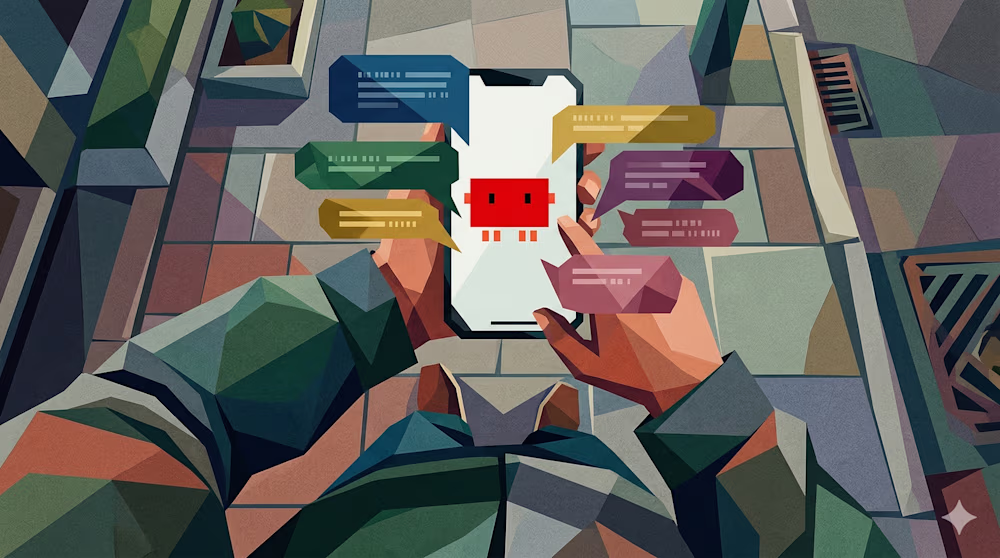

Anthropic has introduced Claude Code Channels, a major upgrade that allows developers to interact with its AI coding agent directly through messaging platforms like Discord and Telegram. This marks a significant shift from traditional “ask-and-wait” AI interactions to a more asynchronous, always-on workflow, where developers can message an AI agent at any time and receive results once tasks are completed.
The update positions Anthropic as a direct competitor to the popular open-source agent OpenClaw, which gained traction by enabling users to run persistent AI assistants that could execute tasks autonomously across messaging apps. OpenClaw’s appeal came from its ability to function as a personal AI worker—handling coding, emails, workflows, and more—but it also introduced security risks and complexity for non-technical users.
With Channels, Anthropic replicates this core functionality while improving accessibility and safety. Developers can now run a persistent Claude Code session that listens for incoming messages, executes tasks such as writing or debugging code, and responds when finished. This is powered by Anthropic’s Model Context Protocol (MCP), an open standard that connects AI models to external tools and data, effectively acting as a bridge between messaging apps and the coding environment.
The result is a more seamless developer experience. Instead of being tied to a desktop or terminal, developers can now manage coding tasks from their phone, turning messaging apps into remote control interfaces for AI-driven development. This lowers the barrier to entry and removes the need for complex self-hosted setups that were previously required for tools like OpenClaw.
Industry reaction has been swift, with many users describing the update as an “OpenClaw killer.” By combining the flexibility of open-source agent frameworks with the reliability, security, and ease of use of a major AI provider, Anthropic appears to have closed a key gap in the market. The move also reflects a broader trend: proprietary AI systems leveraging open standards to build ecosystems while maintaining control over core models.
Ultimately, the release signals a new phase in AI development, where agents are no longer passive tools but persistent digital collaborators that can be accessed anytime, anywhere. The choice for developers now lies between open-source autonomy and integrated, enterprise-grade AI platforms like Claude.
Find out more in the full article at VentureBeat