




Apple’s App Store is again in the news, as the company has quietly taken action against AI-powered “vibe coding” apps in its latest crackdown. That’s according to a new report from The Information, which said that such apps violate App Store rules that prevent apps from running code that changes their own functionality or that of other apps.
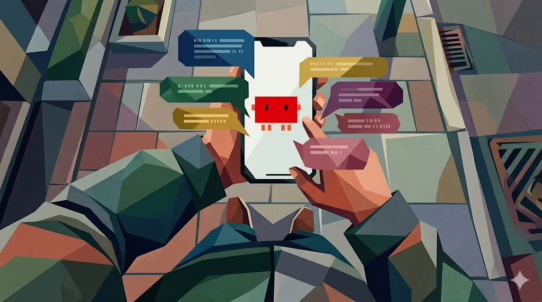
If you’re unaware, vibe coding enables people with little to no programming knowledge to build apps and tools simply by entering natural language text prompts. Replit and Vibecode are among the popular vibe coding apps that let people build web apps, mobile apps, and games.
Vibe coding is spreading across the tech industry, and even Apple has implemented it in Xcode 26.3 by adding support for coding agents from OpenAI and Anthropic. So, what’s bothering Apple when others are doing it?
According to the report, Apple appears to have temporarily prevented apps, including Replit and Vibecode, from pushing new updates. Apple seems bothered by how apps like Replit present vibe-coded apps in a web view within the original app. This process virtually allows the app to become something else. And the new app isn’t distributed via the App Store, but it still runs on the user’s device.
It’s worth noting that the App Store is a big cash machine for Apple, and such apps are a potential threat. However, such apps would also bypass the App Store Review process that ensures that apps are safe to use and meet Apple’s design and performance standards.
On the other hand, some vibe coding apps also allow users to build apps for Apple devices, which may have increased the number of new submissions on the App Store. Apple does allow students to test executable code, which is covered in its App Review Guidelines 2.5.2:
Educational apps designed to teach, develop, or allow students to test executable code may, in limited circumstances, download code provided that such code is not used for other purposes. Such apps must make the source code provided by the app completely viewable and editable by the user.
According to the publication (via MacRumors), Apple was close to approving pending updates for such apps if they changed how they work. For instance, Replit would get the green light if its developers configure the app to open vibe-coded apps in an external browser rather than the in-app web view. Vibecode is also close to being approved if it removes features, such as the ability to develop apps specifically for the App Store.
Source: Neowin