

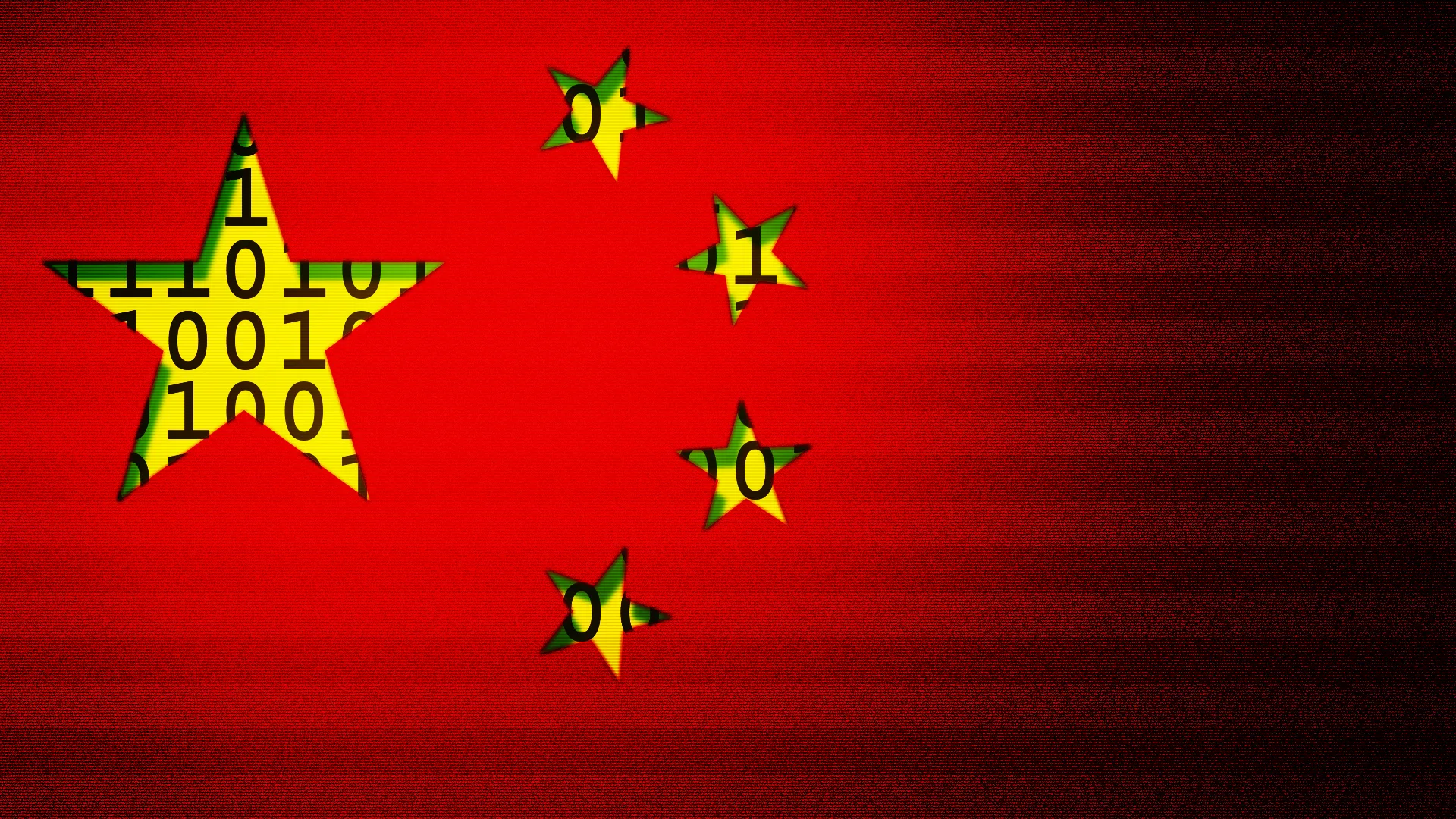
For much of the past two years, the AI industry has been defined by one assumption: the world's most advanced models would continue to come from the United States. That assumption is now being challenged.
Chinese AI company Moonshot AI has unveiled Kimi K3, a frontier model that is already being ranked alongside—and in some cases ahead of—the latest models from OpenAI and Anthropic. More importantly, it is doing so at a significantly lower cost and will soon be released as an open-weight model, allowing enterprises and governments to deploy and customize it on their own infrastructure. The launch represents another significant milestone in China's rapid acceleration toward the AI frontier and highlights just how quickly global competition is evolving.
Competitive Performance at a Lower Price
Early benchmark results suggest Kimi K3 has entered the top tier of global AI models. Independent evaluations have shown the model outperforming Anthropic's flagship systems on several coding and reasoning benchmarks while remaining highly competitive against OpenAI's latest releases.
Perhaps more significant for enterprise adoption is its economics. Kimi K3 is reported to cost around 40% less than comparable premium U.S. models. That combination of strong performance and lower operating costs could make it an attractive option for organizations looking to deploy advanced AI at scale without paying the premium typically associated with proprietary frontier systems.
Open Models Are Reshaping Enterprise AI
One of the biggest differentiators is Moonshot AI's decision to release Kimi K3 as an open-weight model. Unlike proprietary AI systems that are only available through cloud APIs, open-weight models allow organizations to run AI inside their own environments, customize models for internal use cases, and maintain greater control over privacy, security, and compliance.
For many enterprises and governments, that level of flexibility is just as valuable as raw benchmark performance. The growing popularity of open models also increases competitive pressure on commercial AI providers whose business models rely on premium subscriptions and cloud-based inference services.
The Gap Between the U.S. and China Is Narrowing
Until recently, most analysts believed Chinese AI companies remained six to twelve months behind the leading U.S. frontier labs. Kimi K3 suggests that gap may be closing far faster than expected.
Whether through rapid engineering progress, architectural innovation, or the ability to build on publicly available research, Chinese AI companies continue to demonstrate that frontier-level performance is no longer exclusive to Silicon Valley. The result is an increasingly competitive global AI landscape where leadership may now be measured in months rather than years.
Competition Is No Longer Just About Intelligence
While benchmark scores remain important, the next phase of AI competition is increasingly being defined by economics rather than raw capability. Organizations are no longer asking only which model performs best. They are asking which model delivers the greatest business value, the lowest operating cost, the highest level of customization, and the greatest deployment flexibility.
In that environment, a model that performs close to the frontier—but is dramatically cheaper and can be deployed on private infrastructure—may ultimately prove more attractive than the absolute highest-performing proprietary system. This is particularly true for enterprise AI, where total cost of ownership often matters more than marginal improvements on benchmark leaderboards.
The AI Race Has Become Global
American AI companies continue to push the frontier forward, with next-generation systems already in development. However, the emergence of Kimi K3 reinforces an increasingly important reality: AI innovation is no longer concentrated in one country.
The race has become global, with competition now taking place across model quality, infrastructure, pricing, open-source ecosystems, and enterprise deployment. For businesses adopting AI, this is ultimately positive news because greater competition accelerates innovation, expands customer choice, and continues driving down the cost of advanced intelligence.
The next chapter of AI may not be defined by who builds the smartest model. Instead, it may be decided by who delivers frontier intelligence at a price, scale, and deployment model that enterprises around the world choose to adopt.
Sources: Reporting from Axios on Moonshot AI's Kimi K3 release and independent AI benchmark evaluations.