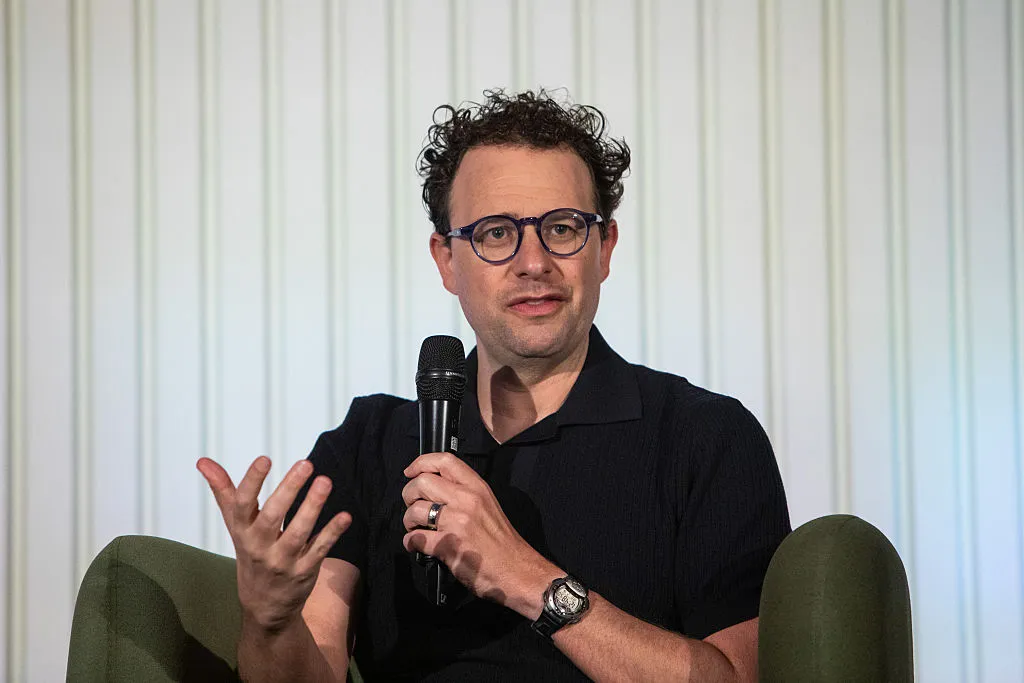

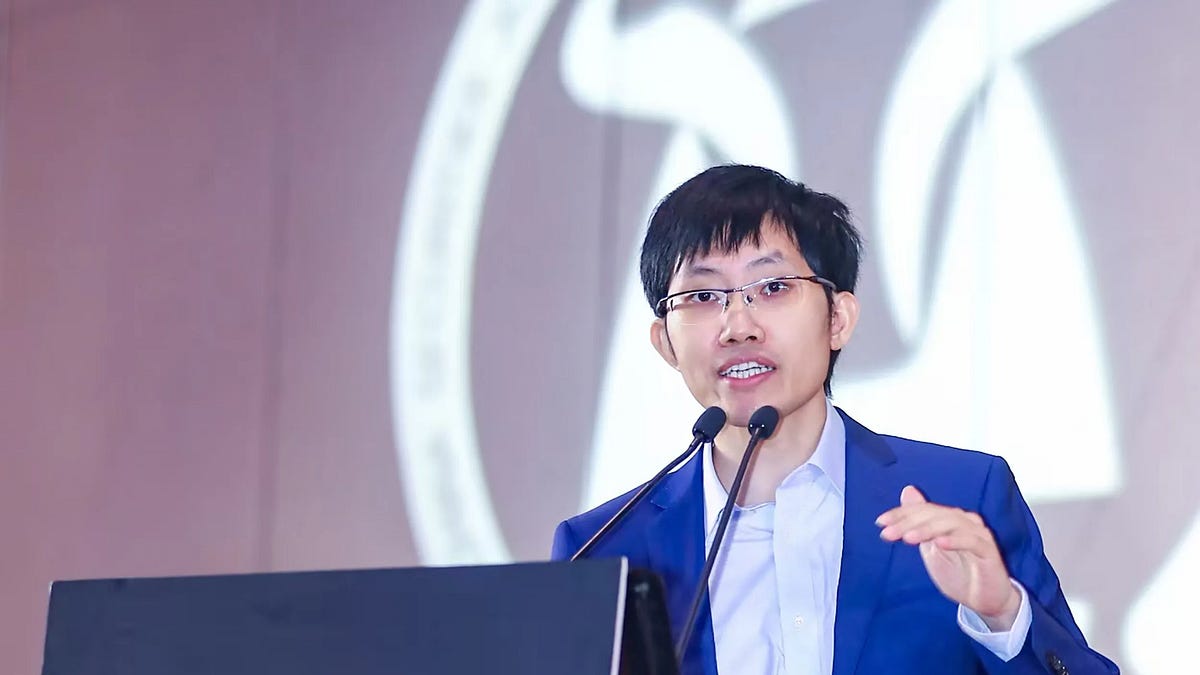
Today, a record of a conversation between Liang Wenfeng, the founder of the Chinese leading AI company DeepSeek, and its investors was made public. The talk happened on May 20. In it, Liang explained in detail DeepSeek’s vision, why he thinks open-source models can help businesses, his views on American AI models, how he compares AI in China and the US, and his picture of the future AI world.
Chinese AI founders are often different from American ones. They tend to stay away from the media and put all their energy into building models. They seldom get the chance to fully share their vision for the industry. So this talk, which lasted nearly four hours, gives us a rare look into his thinking.
How do we manage so many people, how are we organized? Actually, we have no organization—it’s vision-driven, organized by a vision. We have no organization.
I don’t usually like ideas that are too abstract, but Liang’s understanding of AI is almost like Daoist philosophy. He does not see AI simply as a tool to build a monopoly. Instead, he sees it as a huge wave that is changing human history, a tide that no single company can ever own.
That is why he believes the best attitude is to hold back and be kind: you should set limits on your own gain, earn only a fair profit, and share openly to reduce pushback. In his heart, the real goal is to reach AGI. All other business wins are just side products, natural results as the technology moves forward, not the main goal. One interesting point: he thinks the biggest key to reaching AGI is not finding the very best people, but keeping the team stable.
Liang believes that the lead among top American models, such as OpenAI, Anthropic, and Google, is cyclical and will not last. He says Anthropic’s early edge in coding agents will soon fade. When talking about the gap between China and the US, he says America’s lead comes only from having more computing power.
He thinks talent is spread around the world by chance, and China has no real shortage of it. In his eyes, American models keep getting bigger because they have plenty of resources, and their basic business idea is to lock up the market with closed models and high profits. But this pursuit of very high profits is weak in terms of strategy, because it will surely be beaten by those who are happy to earn only a fair profit.
He believes China has built-in advantages in cost and user experience, since American companies have no strong reason to push costs to the very limit. He pictures a future where competition looks like that in other manufacturing fields: China will play the role of offering cheaper services in a systematic way.
Why do we insist so much on open source because of this vision? Because this vision itself requires open source. Without this vision, you can’t organize people.
At the same time, he thinks Nvidia’s CUDA ecosystem wall is being broken down by new technology, and that building a new ecosystem for Chinese chips is a historic chance. Once the limit on how many chips can be made is overcome, the gap in basic computing power between China and the US will go away.
In his view, the future AI world will never be a pyramid controlled by one or a few giants. It will be a system based on holding back, one where everyone gains and lives together.
First, the number of companies working on base models will shrink; in the end, only three or four need to compete fully, and any that try to make very high profits will be pushed out.
Second, he insists that open source is the base of the ecosystem. He believes a pricing plan that earns only a small profit, such as getting back the hardware costs in ten months, can let open source and business work together without conflict. This will push more partners to build apps on top of open source models.
Finally, DeepSeek itself will focus strongly on the main road to AGI: mainly language models, chains of thought, agents, and continual learning. It will actively leave aside areas like video generation and world models, giving those business opportunities to the whole ecosystem and to society.
By making only the most important tech advances, the company hopes to help the whole ecosystem grow, with an attitude of not fighting or competing.
Source: Inside China
https://www.fredgao.com/p/deepseeks-liang-wenfeng-breaks-his