

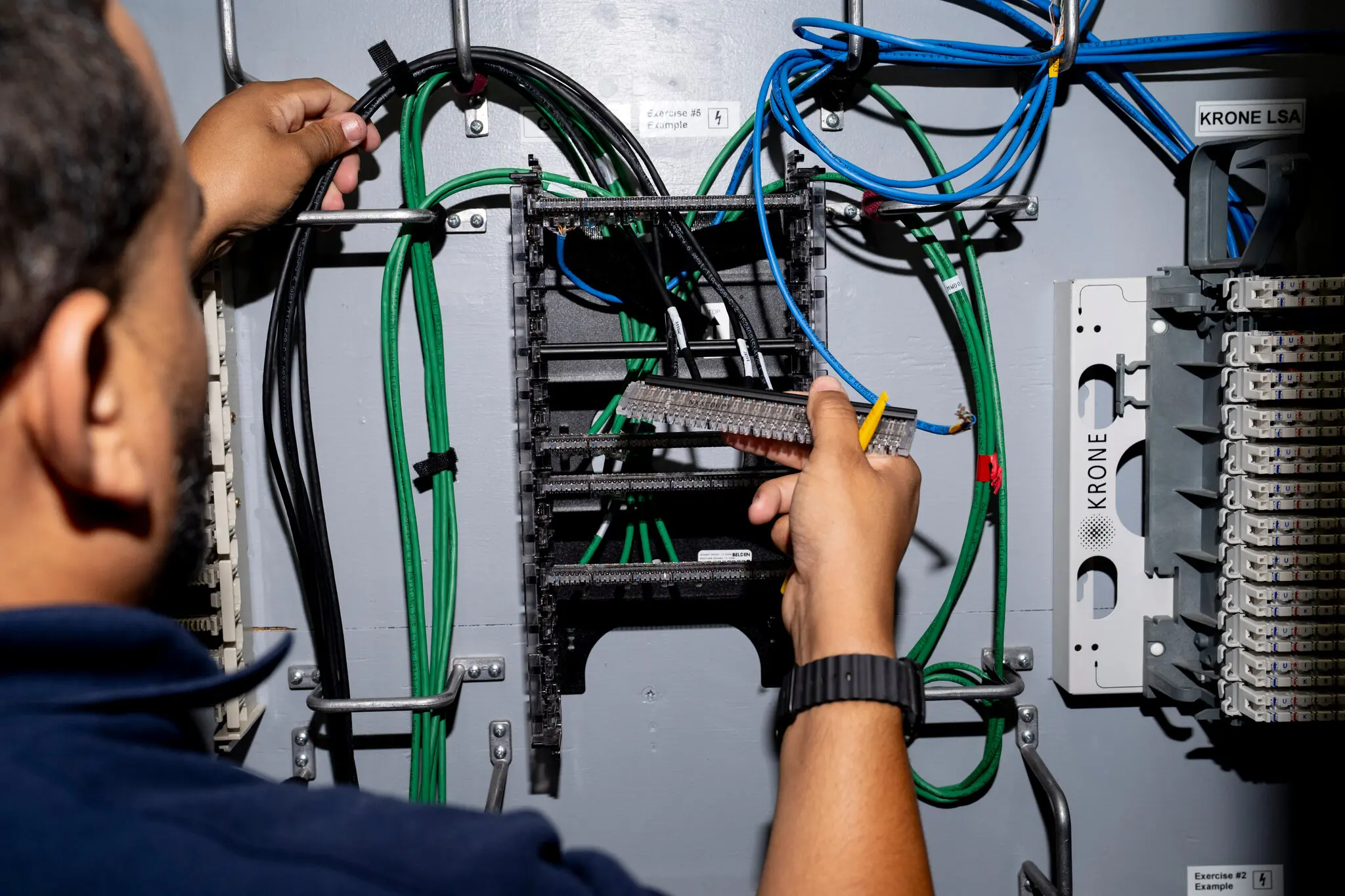
Artificial intelligence is often presented as a purely digital revolution, driven by software engineers, algorithms and advanced computer chips. However, behind every AI model sits an enormous physical infrastructure that must be constructed, powered, cooled and maintained.
As technology companies invest billions of dollars in data centres, demand is growing rapidly for electricians, carpenters, welders, plumbers, fibre technicians and heating and ventilation specialists. These workers are becoming essential to the expansion of artificial intelligence, creating an unexpected employment boom far beyond the traditional technology sector. The AI economy may be built with code, but it is being made possible by skilled labour.
Data Centres Are Pulling Workers Away From Existing Industries
In Detroit, electrician-in-training Tyler Shelton spends much of his time repairing cables and electrical equipment beneath the city’s streets. Recently, however, many workers from his company have been reassigned to a major data centre project located around an hour away.
“Everybody wants that money,” Shelton explained. “We have work to do, but we’re also losing a good chunk of manpower to these data centres.”
The attraction is easy to understand. OpenAI’s planned data centre in Saline Township has been described by Michigan officials as the largest single investment in the state’s history. Construction will require hundreds of electricians working long shifts, with overtime and bonuses that can push earnings well beyond normal industry levels.
For workers like Shelton, the opportunity creates a difficult decision. The higher income could help him buy a home, but the demanding schedule could also leave little time for life outside work.
“I’d like to have a house in the next year or so,” he said. “So it’s like, I understand the draw, but I also like to have a life outside work.”
His situation reflects a broader tension emerging across the skilled trades. Data centres are creating highly paid opportunities, but they are also drawing experienced workers away from housing, utilities, manufacturing and other infrastructure projects that still need to be completed.
Technology Companies Are Investing Directly in Worker Training
AI companies have recognised that access to computing power is not only limited by chips and electricity. It is also limited by the number of people available to build and operate the facilities.

Google has committed $50 million to a training partnership involving the International Brotherhood of Electrical Workers and electrical contractors. The initiative aims to increase annual apprenticeship enrolment from approximately 19,500 workers to 30,000 over three years in selected locations.
BlackRock has launched a separate $100 million initiative to support training and employment for as many as 50,000 electricians, welders, plumbers and heating and ventilation technicians. Rather than creating its own training schools, the organisation plans to strengthen existing vocational programmes and work alongside companies including Google, Meta, Walmart and Home Depot.
Meta is investing $115 million in its America’s Workforce Academy, which will train electricians, plumbers, welders, fibre technicians and other workers. The programme is expected to cover tuition, certification and transport costs while paying participants during training and offering employment opportunities to graduates.
Together, Meta, Google and BlackRock have committed more than $265 million to expanding the skilled workforce required for the AI infrastructure boom.
Demand for Data Centre Workers Is Growing Rapidly
Employment data already shows a significant shift. According to research from Indeed, job advertisements mentioning data centres have more than doubled over the past two years.
During the same period, total job postings across the United States declined by approximately 12%, while technology job postings outside the data centre sector fell by around 6%. This means that data centre employment is growing while many other parts of the labour market are slowing.
Approximately six out of every 1,000 American job postings are now connected to data centres, compared with around two out of every 1,000 in the middle of 2023. In 2026, 71% of these positions were linked to the ten largest technology companies by market value.
Much of this demand is appearing outside established technology hubs. Cities including Columbus, Jackson and Reno have experienced sharp increases in hiring by major technology companies, demonstrating how AI infrastructure investment is extending into regional economies that previously had little exposure to the technology industry.
The AI Economy Needs More Than Software Engineers
Around one-quarter of data centre job openings involve installing or maintaining electrical systems, telecommunications equipment, cables, servers and other physical infrastructure. When infrastructure operations, support and maintenance are included, these categories represent approximately half of all related job advertisements.
Although many of these positions pay less than traditional software engineering roles, they often offer a substantial premium compared with equivalent work in other industries. Indeed estimates that installation and maintenance roles associated with data centres offer median hourly wages approximately 42% higher than similar positions elsewhere, representing an additional $10 per hour.
This wage premium demonstrates how urgently AI infrastructure developers need skilled workers. It also shows that some of the clearest employment opportunities generated by artificial intelligence may not require advanced degrees in computer science.
For workers who can build power systems, manage cooling equipment, install networks or maintain industrial facilities, AI could become one of the most important sources of employment growth over the coming decade.
Training Must Expand Without Weakening the Wider Economy
The central challenge is not simply training more people for data centres. It is doing so without creating shortages elsewhere.
Tina Williams, who manages private-sector training grants for the electrical industry partnership, explained that the goal is to meet the needs of data centre developers while preserving the industry’s existing capacity.
“We want to bring in enough to fulfil the need for the data centres, while maintaining our core work in each of these locals,” she said.
This balance will be difficult to achieve. Electrical grids need upgrading, new homes need wiring and factories, hospitals and public infrastructure all depend on the same workers now being recruited by technology companies.
If AI projects absorb too much of the available workforce, they could delay other essential investments and push labour costs higher across the economy.
Construction Jobs May Not Last Forever
The data centre boom is generating thousands of jobs during construction, but there is less certainty about how much employment will remain once facilities become operational.
Building a large campus requires electricians, steelworkers, carpenters and plumbers in significant numbers. Once construction is complete, however, many facilities operate with relatively small permanent teams.
This creates an important distinction between temporary infrastructure demand and sustainable long-term employment. Communities may experience several years of intense construction activity without receiving the same number of permanent jobs afterward.
Training programmes must therefore provide workers with transferable skills that remain valuable beyond a single data centre project. Electricians, heating and ventilation technicians and fibre specialists should be able to move between AI facilities, energy projects, manufacturing and traditional infrastructure work as local demand changes.
Communities Are Also Bearing the Cost of Expansion
The growth of AI infrastructure is not creating benefits without consequences. Data centres require large amounts of electricity, water and land, often placing pressure on the communities where they are built.
Residents have raised concerns about noise, heat, emergency fuel storage, property values, electricity prices and the visual impact of large industrial facilities. Similar disputes are appearing in the United States, Japan and other countries experiencing rapid data centre development.
These concerns raise a wider question about how the economic benefits of AI infrastructure should be distributed. Technology companies may receive computing capacity, construction firms may receive contracts and skilled workers may earn higher wages, while nearby communities carry much of the environmental and infrastructure burden.
Responsible development will require companies and governments to consider not only how quickly facilities can be constructed, but also how they affect housing, public services, energy systems and local quality of life.
AI Is Reshaping the Meaning of a Technology Job
The rise of artificial intelligence is often discussed in terms of the office jobs it could automate. Less attention is given to the entirely new categories of physical work it is creating.
AI systems cannot operate without buildings, power, cooling, networks and continuous maintenance. That means the future of the technology industry will depend not only on researchers and software developers, but also on electricians, welders, plumbers, construction workers and technicians.
The AI revolution is therefore not replacing the physical economy. It is creating a new layer of demand within it.
The companies that succeed may not simply be those with the most advanced models or the largest chip supplies. They may be the organisations that can secure the skilled workforce needed to turn those technologies into functioning infrastructure.
Sources: The New York Times reporting on skilled trade recruitment for AI data centres and Indeed Hiring Lab research on hiring for the data centre build-out.