
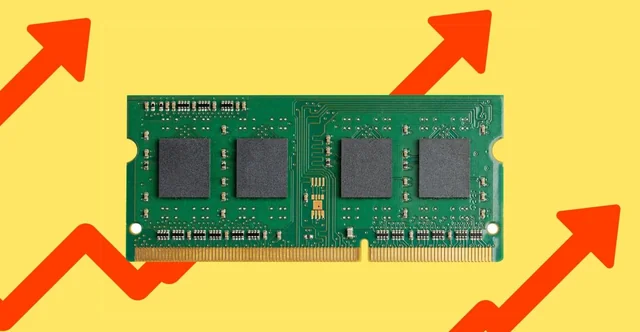
The AI boom is about to claim some unexpected casualties. Phison CEO Pua Khein-Seng just delivered a stark warning – companies could start dying in the second half of 2026 if they can’t secure enough RAM. Speaking in a televised interview with Taiwanese broadcaster Next TV, the memory controller chief painted a grim picture of a supply chain stretched to breaking point by artificial intelligence’s insatiable appetite for memory chips.
The tech industry’s RAM crisis just got a face and a timeline. Phison, one of the world’s dominant makers of SSD controller chips, is now sounding the alarm through its CEO Pua Khein-Seng – and the message is blunt: some companies won’t survive 2026.
In a televised interview with Ningguan Chen of Taiwanese broadcaster Next TV, Pua agreed that companies may need to slash their product lines in the second half of this year. More dramatically, he acknowledged that some firms will simply die if they can’t secure the memory components they need. The interview, conducted entirely in Chinese, was confirmed by The Verge through native speakers who verified machine-translated summaries that have been ricocheting through industry channels.
This isn’t just another supply chain hiccup. Phison sits at a critical junction in the memory ecosystem, providing the controller chips that manage data flow in SSDs and flash storage devices. When its CEO talks about component shortages, he’s speaking from a vantage point that sees orders from manufacturers across the entire electronics industry.
The root cause? AI’s explosive growth is gobbling up memory capacity at unprecedented rates. Data centers building out infrastructure for large language models and AI training need massive amounts of high-bandwidth memory – the same DRAM chips that go into everything from smartphones to laptops to gaming consoles. As hyperscalers like Microsoft, Google, and Amazon race to expand their AI capabilities, they’re outbidding consumer electronics makers for limited memory supply.
The situation recalls past semiconductor shortages, but with a crucial difference – this one has a clear villain. Unlike the pandemic-era chip crunch that hit automotive and consumer electronics simultaneously, the current RAM shortage stems from a deliberate shift in production priorities. Memory manufacturers are reallocating capacity toward high-margin AI server components, leaving traditional product categories fighting for scraps.
Phison’s warning carries particular weight because the company doesn’t make memory chips itself. It makes the controllers that work with those chips, giving it a relatively neutral perspective on supply dynamics. When Pua talks about companies potentially going under, he’s describing what happens when manufacturers can’t source enough DRAM or NAND flash to build their products at competitive prices.
The timeline is what makes this urgent. Second half of 2026 means the crunch hits in roughly six months. Companies that haven’t locked in memory supply contracts or redesigned products around available components are running out of runway. For smaller manufacturers without the purchasing power of major OEMs, the math gets brutal fast – either pay 2-3x normal prices and kill your margins, or don’t ship products at all.
Consumer electronics and PC makers face the sharpest exposure. Gaming laptops, mid-range smartphones, and budget PCs all depend on commodity DRAM that’s increasingly being diverted to AI infrastructure. Nvidia’s latest GPU servers can pack over 1TB of HBM memory per system, and hyperscalers are ordering them by the tens of thousands. Each one of those servers consumes memory allocation that might have gone into thousands of consumer devices.
The industry’s response has been muted so far, likely because no one wants to spook customers or signal weakness to competitors. But behind closed doors, product roadmaps are being rewritten. Some manufacturers are exploring memory configurations they would’ve rejected a year ago – shipping laptops with soldered RAM that can’t be upgraded, or using older memory standards to tap into less-constrained supply channels.
What makes Pua’s comments particularly striking is the casualness with which he discusses potential company failures. In an industry that typically speaks in euphemisms about ‘market challenges’ and ‘supply headwinds,’ his willingness to say companies will die suggests the private conversations are far more dire than public statements indicate.
The next six months will reveal whether this is alarmist talk or accurate forecasting. But when a CEO whose company depends on a healthy electronics ecosystem starts openly discussing bankruptcies, it’s worth paying attention. The AI revolution is creating winners and losers in unexpected places – and the losers might not be the ones falling behind on algorithms, but the ones who simply can’t get enough memory chips to build their products. For consumers, expect fewer product choices, higher prices, and a lot of ‘out of stock’ notices as we head into the back half of 2026.
Source: Tech Buzz
https://www.techbuzz.ai/articles/ram-shortage-could-kill-products-companies-by-h2-2026