

The global economy is entering a period of transformation driven by the widespread adoption of artificial intelligence. Across many industries, machines are rapidly outperforming humans in tasks that were once considered highly skilled. From legal research to software development, AI systems are proving faster, cheaper and increasingly more reliable than their human counterparts.
At the same time, a seemingly unrelated sector is experiencing sustained and accelerating growth: gaming. Valued at over $200 billion and expanding at approximately 12 percent annually, the gaming industry is now one of the largest and fastest-growing markets in the world. More importantly, it may represent one of the few sectors inherently resistant to the displacement effects of AI.
(Sources: Newzoo, 2024; PwC, 2023–2027)
AI and the Decline of Knowledge Work
Artificial intelligence is reshaping the economics of knowledge-based professions. Today’s AI systems can generate legal documents in seconds, produce optimized designs faster than entire architectural teams and analyze and execute trades at speeds no human can match.
The underlying driver is economic efficiency. Organizations adopt technologies that reduce cost and increase output. As AI continues to improve, the demand for human labor in many of these domains is likely to decline. This creates a fundamental question: what replaces these roles as they diminish?
(Sources: McKinsey 2023; Goldman Sachs, 2023)
Human Competition as an Economic Category
While AI is transforming knowledge work, it has far less impact on activities centered around human competition. Sports operate under a different economic model, where value comes from human performance, unpredictability and emotional engagement—not efficiency. Audiences are drawn to narratives of effort, failure and success, not perfect outcomes.
The appeal of sport lies in its human element and this applies equally to esports. Artificial intelligence can simulate gameplay, but the value of gaming is built on identity, narrative and human connection. Audiences follow players, not systems, investing in personalities and rivalries. The unpredictability of human decision-making drives engagement, making human competition the core of the gaming economy.
(Source: Deloitte, 2023)
The Rise of the Esports Economy
Esports has emerged as a major component of the modern gaming economy. The global esports market is estimated to be worth between $1.3 billion and $2.6 billion in 2025, with projected growth exceeding 20 percent annually. Some forecasts suggest the market could surpass $9 billion by 2033.
This growth is supported by multiple revenue streams, including sponsorships, media rights, advertising, tournament prize pools and digital platforms. At the same time, global viewership continues to expand, with millions of spectators regularly watching competitive gaming events. What was once considered a niche activity has evolved into a structured and scalable industry.
(Sources: Statista, 2025; Fortune Business Insights, 2024; Newzoo, 2024)
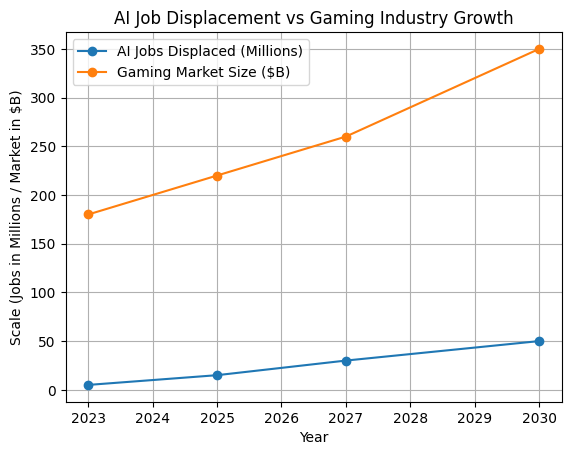
As AI-driven automation accelerates job displacement across knowledge industries, the gaming economy continues to expand rapidly, highlighting a structural shift toward performance-based, human-driven income models.
Gaming as a Viable Economic Alternative
As traditional professions face increasing automation, gaming is beginning to present itself as a viable alternative form of income generation. Competitive gaming, streaming and digital asset ecosystems are creating new pathways for individuals to monetize skill, time and performance. Unlike traditional employment, these systems are global, accessible and merit-driven.
This shift introduces a new type of economic participation, where income is based on performance rather than credentials, competition is global rather than limited to local employment markets and engagement is continuous rather than confined to fixed working hours. For individuals whose roles are being displaced by AI, these environments offer an alternative that is not easily automated.
(Sources: PwC, 2023–2027; Nielsen, 2023)
Esports at Scale: Global Tournaments and Prize Pools
The rapid growth of esports is best illustrated by the scale and structure of its leading global tournaments. The Esports World Cup 2025 in Saudi Arabia has established itself as one of the most ambitious events in competitive gaming, bringing together elite players and teams across multiple titles in a festival-style format. With prize pools exceeding $60 million, it represents one of the largest financial commitments in esports history.
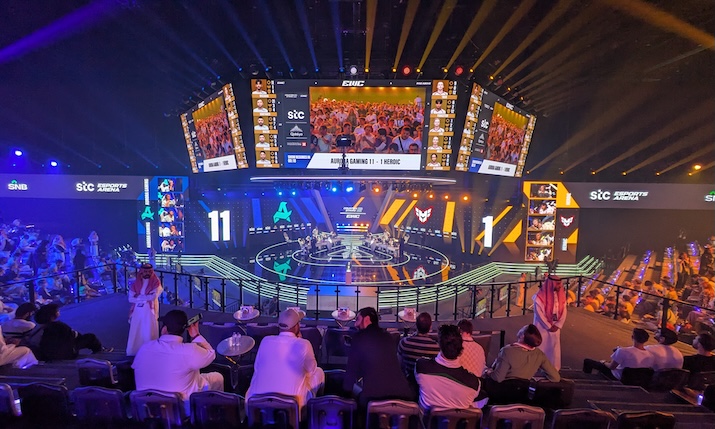
At the same time, circuits like the Capcom Pro Tour 2025 provide a structured, year-long competitive pathway through online qualifiers, regional events and international tournaments, culminating in the Capcom Cup where the top 48 players compete for a prize pool of up to $2 million.
Together, these events highlight esports as a mature and scalable economic system. High production value, global participation and growing prize pools are turning competitive gaming into a viable profession. Built on merit-based access, esports offers a more open and globally accessible pathway to earning through performance.
(Sources: SVG Europe, 2025; Liquipedia, 2025)
Streaming and the Creator Economy
Alongside competitive play, streaming has become a major pillar of the gaming economy and a powerful pathway to income generation. Now a multi-billion dollar industry estimated at $30–50 billion annually, it enables gamers to turn gameplay into a profession through creator-driven revenue streams across platforms such as Twitch, YouTube, and Kick.
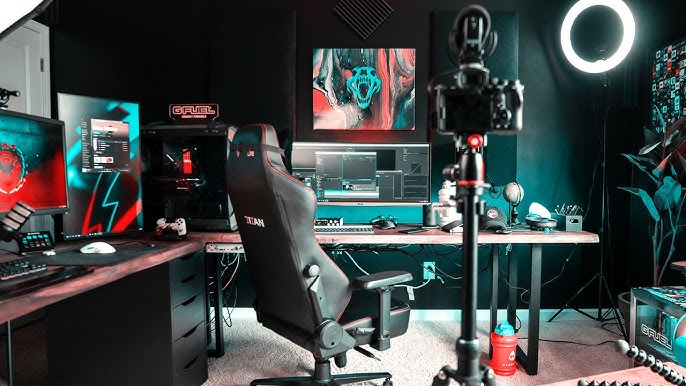
Leading streamers can earn from $1 million to $10+ million annually through subscriptions, ads, sponsorships and platform deals rivaling top entertainers. Mid-level creators can generate up to $10,000 per month by covering new games and building loyal communities.
(Sources: Forbes; Business Insider 2024)
By combining content creation with competitive play and social media, gamers can scale their income over time making streaming a key layer of the gaming workforce where consistency, personality and audience engagement matter as much as skill.
(Sources: StreamElements; Twitch Tracker Data 2024)
From Players to Earners: Scaling the Gaming Economy
The gaming economy is already beginning to generate income at scale through player participation. In Web3 ecosystems gaming guilds such as YGG and KGEN are part of a rapidly growing network of millions of active players that are demonstrating early models where large communities engage daily in competitive, reward-driven gameplay to earn meaningful and sustainable income.
These systems combine digital ownership, tokenized rewards and structured progression loops enabling players to monetize time, skill and consistency. What began as experimental “play-to-earn” models has evolved into more sustainable “play-and-earn” frameworks where value is tied to performance and contribution rather than speculation.
(Sources:Delphi Digital 2024)
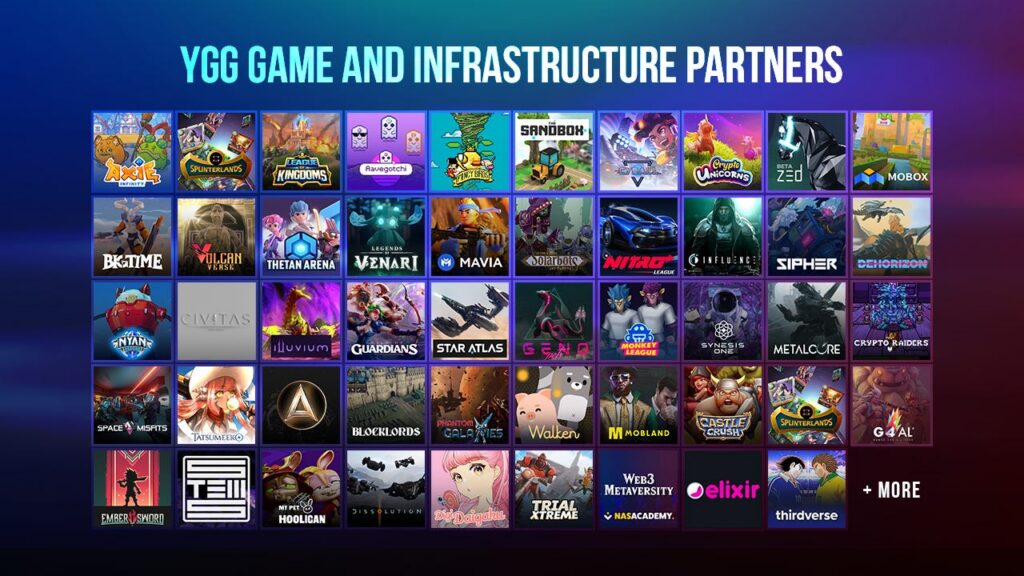
Providing these economic models can be refined and integrated into mainstream (Web2) gaming they have the potential to create entirely new labor markets. Competitive ladders, tournaments, quests and creator ecosystems can be structured to distribute value across millions of participants and not just elite players.
With the right balance of rewards and engagement loops we will see gaming evolve into an always-on income layer where individuals can transition into performance-based earning. In this model gaming does not replace work, it becomes work, unlocking a scalable and accessible economic system built around human participation.
(Sources: a16z, World Economic Forum 2023)
A Shift Toward Performance-Based Economies
As artificial intelligence reduces the need for human input in knowledge-based tasks, it is also redefining the nature of work. Many professions will be transformed as automation becomes more capable and cost-effective, shifting value toward domains that emphasize human experience, performance and interaction while new economic models emerge.
Gaming sits at the intersection of these forces. It combines competition, entertainment, digital ownership and global accessibility in a single ecosystem. Unlike traditional industries, it scales without geographic constraints and operates continuously. This positions gaming not just as an industry, but as a foundational layer of the emerging global economy.
The future is Gaming
Gaming represents one of the clearest examples of a sector where human participation remains central and irreplaceable. Its continued growth suggests it will play a significant role in redefining labor in the coming years, evolving into a viable, global and resilient economic system that helps shape the future of work in an AI-driven world.
Author: Karsten Becker, CEO GKOI
Source: Medium
https://gkoi0x.medium.com/the-gaming-economy-a-new-workforce-in-the-age-of-ai-8980ce652734
References
Newzoo – Global Games Market Report (2024)
https://www.newzoo.com/resources/trend-reports/newzoo-global-games-market-report
PwC – Global Entertainment & Media Outlook (2023–2027)
https://www.pwc.com/gx/en/industries/tmt/media/outlook.html
McKinsey Global Institute – The Economic Potential of Generative AI (2023)
https://www.mckinsey.com/mgi/our-research/the-economic-potential-of-generative-ai
Goldman Sachs – The Potentially Large Effects of Artificial Intelligence on Economic Growth (2023)
https://www.goldmansachs.com/insights/pages/generative-ai-could-raise-global-gdp.html
Deloitte – The Future of Sports Fandom (2023)
https://www2.deloitte.com/global/en/insights/industry/technology/future-of-sports-fandom.html
Statista – Esports Market Insights (2025)
https://www.statista.com/outlook/dmo/esports/worldwide
Fortune Business Insights – Esports Market Forecast (2024)
https://www.fortunebusinessinsights.com/esports-market-103074
Newzoo – Esports Market Report (2024)
https://www.newzoo.com/resources/trend-reports/newzoo-global-esports-market-report
Nielsen – Esports Fan Study
https://www.nielsen.com/insights/2019/esports-playbook/
SVG Europe – Esports World Cup 2025 Coverage
https://www.svgeurope.org/blog/headlines/esports-world-cup-2025-saudi-team-falcons-defend-title-as-broadcast-production-ramps-up-the-game/
Liquipedia – Capcom Pro Tour 2025
https://liquipedia.net/fighters/Capcom_Pro_Tour/2025
Delphi Digital – Blockchain Gaming Report
https://members.delphidigital.io/reports/blockchain-gaming
DappRadar – Games Industry Report (2024)
https://dappradar.com/reports
a16z (Andreessen Horowitz) – The Future of Gaming
https://a16z.com/games/
McKinsey – Digital Economies / Gaming & Metaverse Insights
https://www.mckinsey.com/capabilities/growth-marketing-and-sales/our-insights/the-metaverse
World Economic Forum – Future of Jobs Report (2023)
https://www.weforum.org/reports/the-future-of-jobs-report-2023
Forbes – Top Creator Earnings / Influencer Income
https://www.forbes.com/top-creators/
Business Insider – Twitch Earnings & Creator Economy Reports
https://www.businessinsider.com/creator-economy
Influencer Marketing Hub – Streaming & Influencer Earnings (2024)
https://influencermarketinghub.com/how-much-do-twitch-streamers-make/
StreamElements & Rainmaker.gg – State of the Stream Report
https://streamelements.com/state-of-the-stream
TwitchTracker – Streamer Revenue & Analytics Data
https://twitchtracker.com