



Learning new skills for
the AI job market
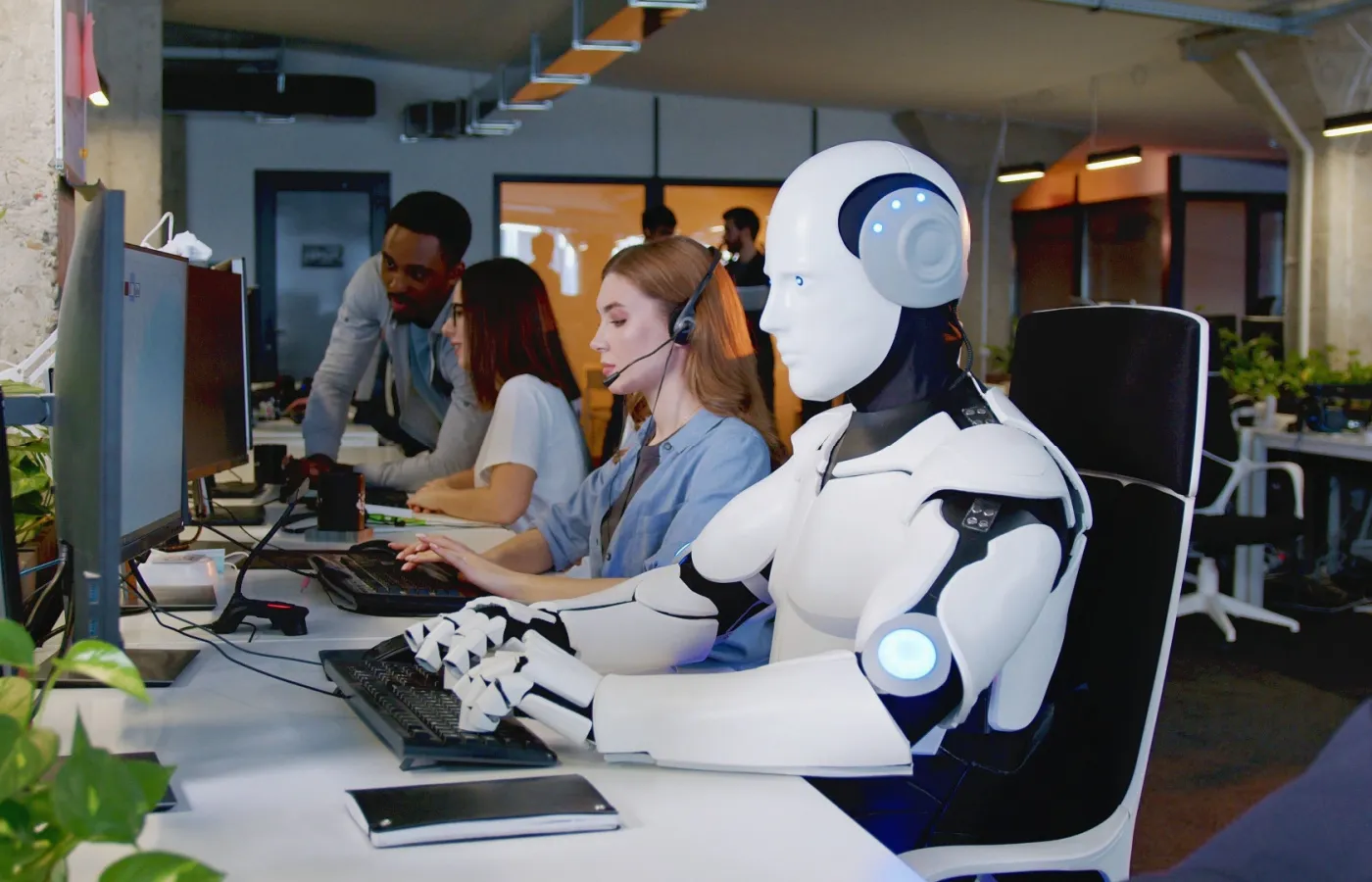
AI re-skilling (or retraining for humans) means learning new skills so you can stay relevant in a job market increasingly shaped by artificial intelligence and automation.
As AI tools take over repetitive tasks and transform industries, many roles are evolving rather than disappearing — which means people who understand how to work with AI gain a major advantage. Re-skilling helps you move into higher-value work, increase your earning potential, stay employable, and future-proof your career. Instead of competing against AI, you learn how to use it as a tool — making you faster, more strategic, and more valuable in almost any industry.
Non-technical AI jobs focus on managing, training, and implementing AI systems rather than coding them, offering opportunities in AI product management, data annotation, prompt engineering, and AI ethics. They leverage human expertise in strategy, creativity and domain knowledge to guide AI development and ensure high-quality ethical outputs.
Top Non-Technical AI Roles
- AI Product/Project Manager: Defines goals and guides teams in developing AI-powered products.
- AI Trainer/Annotator: Provides feedback, labels data, and helps AI recognize patterns.
- Prompt Engineer: Creates and refines prompts to elicit high-quality responses from LLMs.
- AI Ethics Consultant: Ensures AI systems are fair, unbiased, and compliant with regulations.
- AI Content Creator/Editor: Uses AI tools to generate, edit, or review marketing materials and content.
- AI Business Analyst: Interprets data and identifies opportunities to implement AI for efficiency.
- AI Evangelist/Trainer: Promotes AI adoption and educates teams on AI tools.
Key Skills for Non-Tech AI Roles
- Data Literacy: Understanding how data is used to train models.
- Critical Thinking & Problem Solving: Evaluating AI outputs and identifying ethical risks.
- Domain Expertise: Applying knowledge in specialized fields (e.g., healthcare, law) to AI applications.
- Communication: Bridging the gap between technical teams and business stakeholders.
- These positions are crucial for companies aiming to integrate AI effectively without relying solely on engineers.
Future Jobs and Skills
Artificial intelligence is transforming the professional world at a pace few industries have experienced before. The professionals who succeed in the coming decade will not simply perform technical tasks – they will guide intelligent systems, interpret machine outputs and apply human judgement to complex decisions.
Start your jouney
Start your jouney of re-education today with this list of easy certifications that will put you ahead of the pack and up your skill-set.