
For the past several years, artificial intelligence has largely existed inside screens. It has written reports, generated software, analysed data, answered questions and helped businesses automate digital processes. Even the rise of AI agents has remained mostly confined to browsers, applications and enterprise systems.
Robotics changes that. The launch of Google DeepMind's Gemini Robotics ER 2 points toward a future in which AI no longer simply recommends what should happen next. It begins to observe the physical world, make decisions in real time and coordinate machines capable of acting on those decisions. This is the moment when artificial intelligence starts becoming physical intelligence.
Find out more at the full google announcement here
Robotics Has Never Been Only a Mechanical Problem
Robots have existed in factories for decades, but most industrial machines remain highly specialized. They perform predefined actions inside controlled environments where objects, distances and sequences are known in advance. The real world is far less predictable.
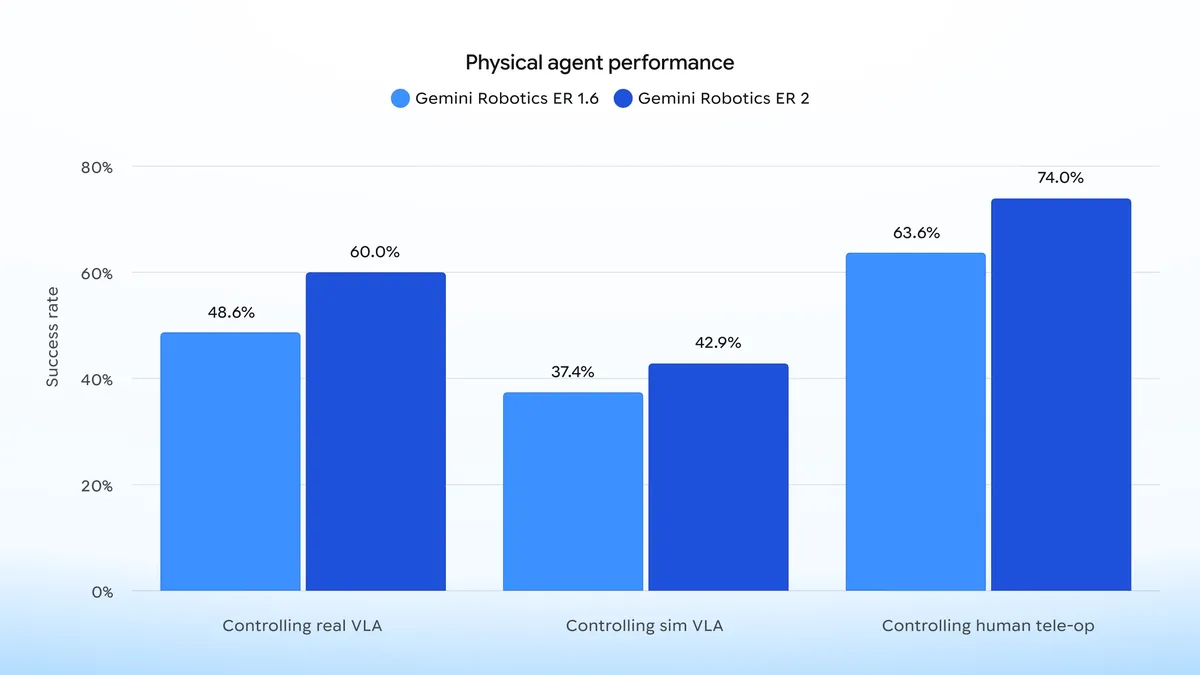
A useful robot must recognise objects, understand language, follow instructions, monitor its surroundings and adapt when conditions change. It must also know whether an action succeeded, when to continue and when to stop. That makes modern robotics as much an intelligence problem as an engineering problem.
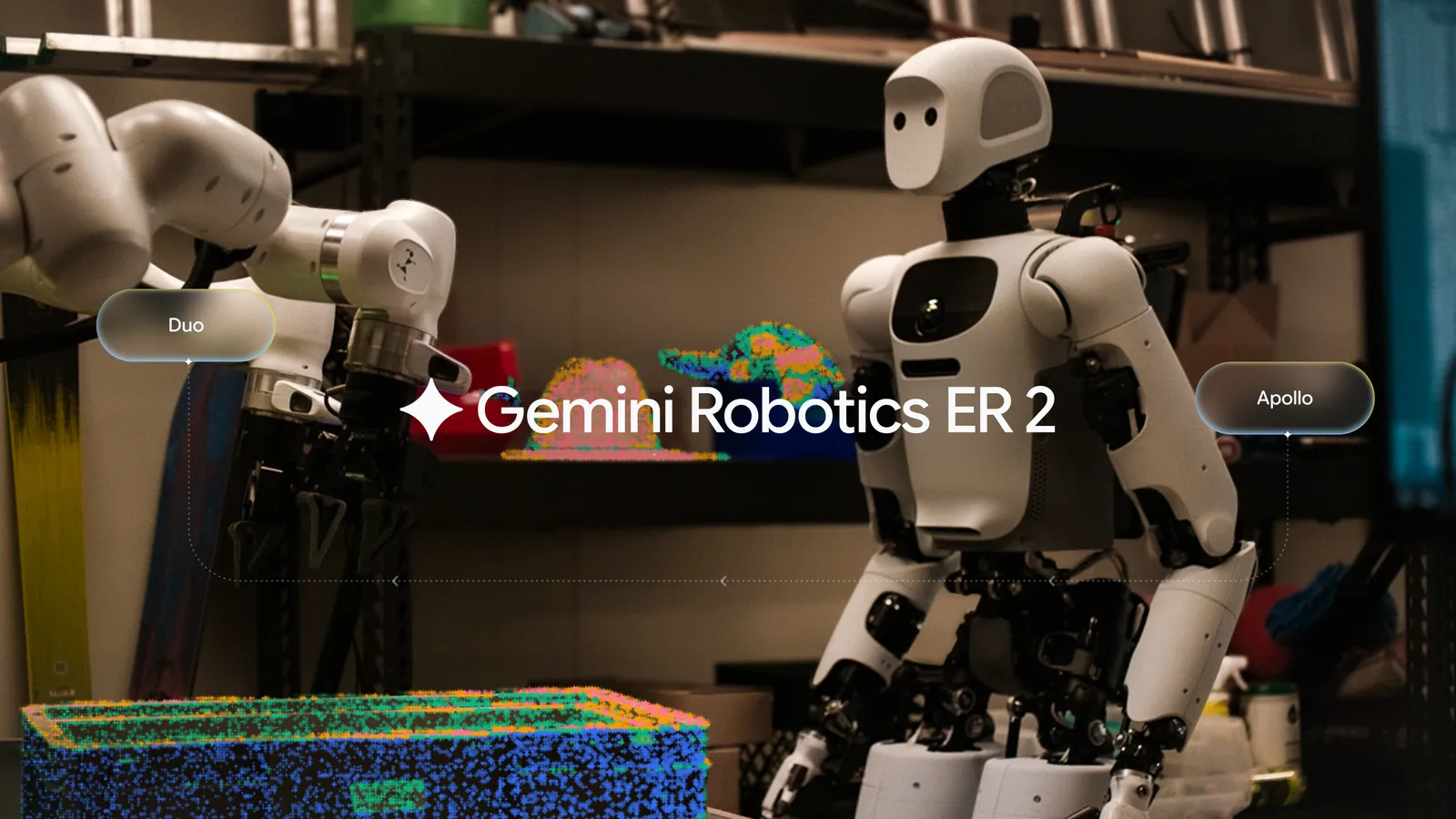
Gemini Robotics ER 2 has been designed as a high-level reasoning layer that can interpret continuous video, communicate with people and plan multi-step physical tasks. Rather than directly controlling every motor, the model delegates execution to lower-level vision-language-action systems and robotics APIs. This separation between reasoning and movement could become one of the defining architectural principles of next-generation robotics.
AI Is Becoming the Robot's Operating System
A useful way to understand this architecture is to think of the AI model as the robot's operating mind. It interprets the goal, understands the environment and decides what should happen next while lower-level systems translate those decisions into movement, navigation, gripping or manipulation.
This mirrors the evolution already taking place with enterprise AI agents. A digital agent analyses a request, selects tools, performs actions, evaluates the outcome and decides on the next step. Physical AI follows the same pattern, but with one important difference. It must make those decisions continuously while operating safely in the real world.
Google says Gemini Robotics ER 2 can reason about the next stage of a task while the current action is still being executed. Instead of the familiar stop-and-think behaviour common in today's AI systems, robots can maintain a continuous flow of observation, planning and execution. That capability moves AI from being a planning assistant to becoming part of the robot's real-time operating system.
The Emergence of Temporal Intelligence
One of the hardest problems in robotics is not deciding what action to take. It is knowing exactly when that action has been completed successfully. A robot tightening a light bulb must know when it is secure. A machine pouring coffee must recognise the precise moment to stop. A warehouse robot needs to detect immediately if an object slips from its grasp before continuing to the next step.
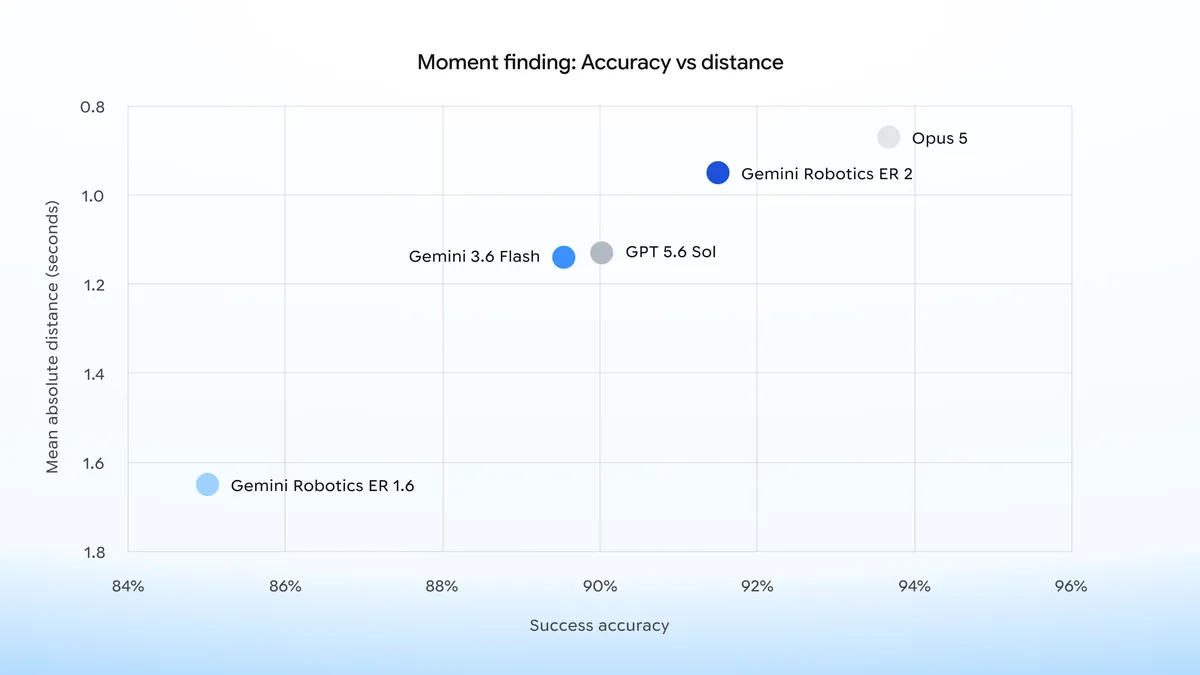
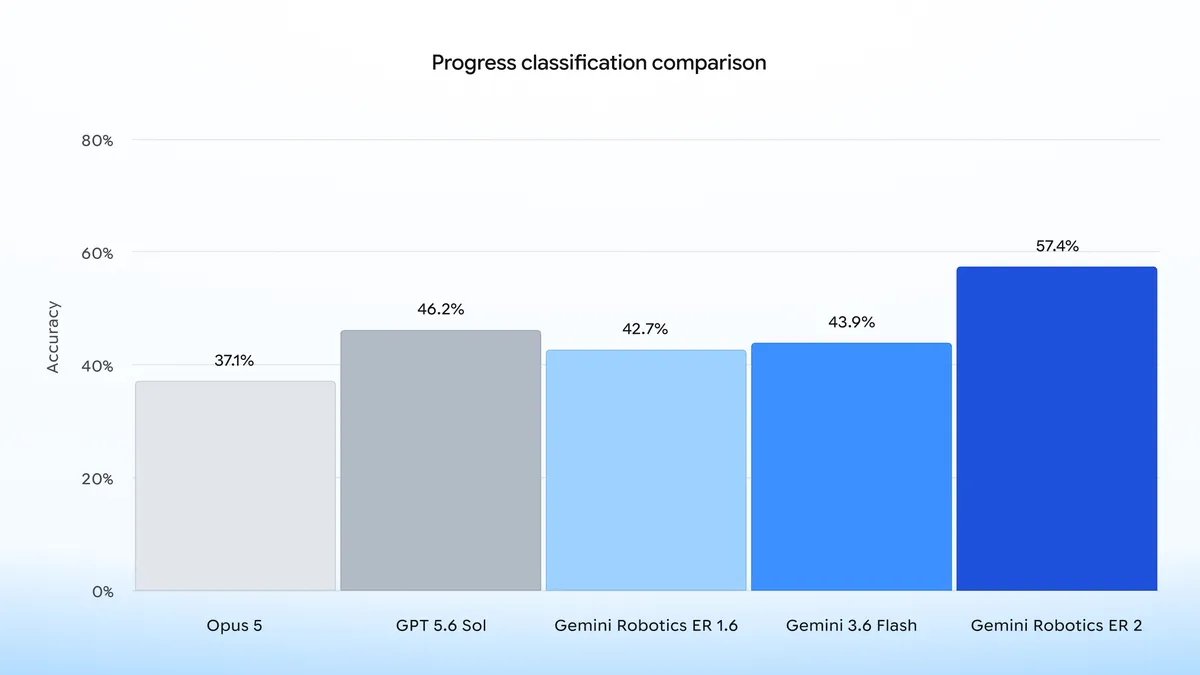
Gemini Robotics ER 2 tackles this challenge by continuously analysing video feeds to estimate task progress and identify the precise moment when important events occur. Rather than simply executing instructions, the system constantly evaluates whether the intended outcome has actually been achieved.
This introduces something entirely new to AI: temporal intelligence. Traditional language models are judged on whether they produce the correct answer. Physical AI must also understand exactly when an answer becomes true. That difference separates a system capable of describing a task from one capable of completing it safely and reliably.
Robots Are Learning to Correct Their Own Mistakes
Perhaps the biggest step forward is not that robots are becoming more intelligent, but that they are becoming more adaptive. Traditional industrial automation follows fixed sequences. If something unexpected happens, production often stops until a human intervenes.
AI-powered robotics is beginning to change that model. By continuously monitoring its own progress, a robot can recognise mistakes, adjust its behaviour and retry failed steps without restarting an entire workflow. Instead of treating every unexpected event as a failure, the system learns to recover and continue.
That behaviour closely resembles the way humans perform physical work. We rarely complete complex tasks by following a perfect internal script. We constantly observe our progress, make small corrections and adapt our actions as conditions change. Robotics is beginning to adopt that same cycle of observation, reasoning and self-correction.