


A new study from the Pew Research Center finds that artificial intelligence has become a regular part of teenage life in the United States, with a majority of teens reporting they have used AI chatbots such as ChatGPT, Copilot, or Character.ai. Roughly three in ten say they use these tools daily, signaling how quickly generative AI has embedded itself into everyday routines.
Teens most commonly use AI for practical purposes, especially searching for information and getting help with schoolwork. Many also rely on chatbots to summarize material, explain difficult concepts, or assist with math problems. Beyond academics, some teens use AI for entertainment, brainstorming ideas, or creating and editing digital content. A smaller group report using chatbots for casual conversation or emotional support.
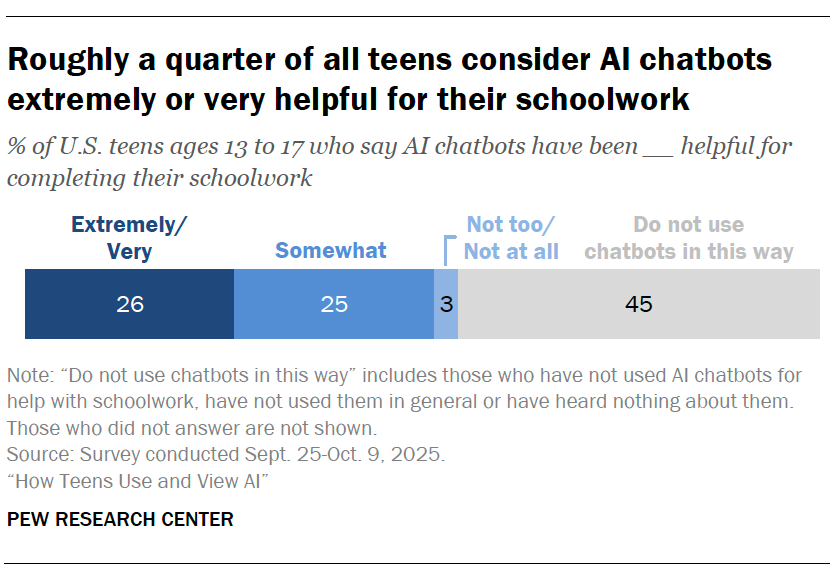
While AI is widely used in education, most teens say they are not relying on it to complete the majority of their assignments. Only about one in ten report doing most or all of their schoolwork with AI assistance. Still, many describe the tools as helpful for specific tasks, particularly research and problem-solving. The findings suggest AI is becoming a supplemental academic resource rather than a full replacement for traditional study methods.
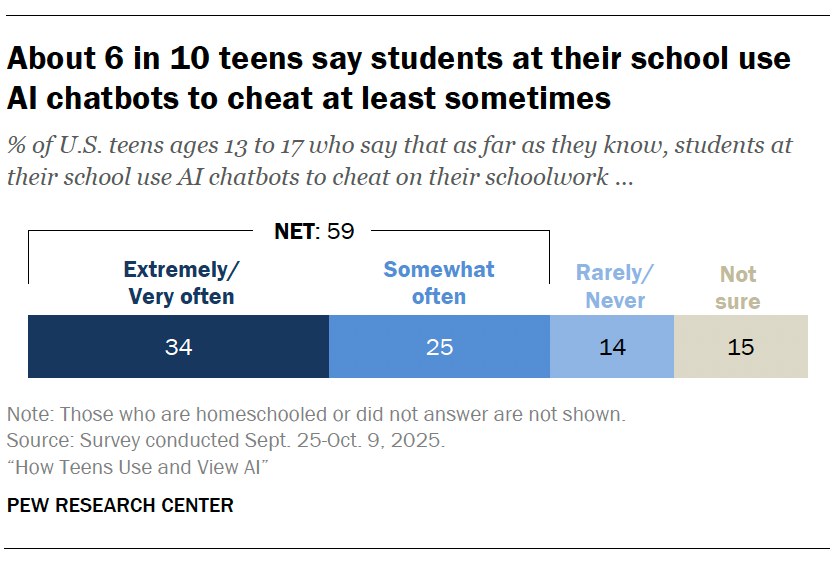
The study also highlights concerns around academic integrity. A majority of teens (59%) believe students at their schools use AI to cheat at least some of the time. This perception is especially common among teens who use chatbots themselves for school-related tasks. The results indicate that schools are grappling with blurred lines between acceptable assistance and misconduct in the AI era.
Looking ahead, teens express cautious optimism about AI’s future impact. Many believe AI will benefit their own lives over the next 20 years, citing improved efficiency, learning tools, and new opportunities. However, they are more divided about AI’s broader societal effects, with some voicing concerns about job loss, overreliance on technology, and ethical risks. The report also notes that teens report higher levels of AI use than their parents realize, underscoring a generational gap in understanding how deeply these tools are shaping youth experiences.
You can read the full article by Pew Research Center here