As artificial intelligence begins to reshape the labor market, economists and policymakers are starting to ask a deeper question: what happens when large numbers of workers are displaced by automation? While predictions about AI-driven layoffs vary widely, the systems designed to support unemployed workers may not be prepared for the scale of disruption that could occur in the coming years.
Executives and AI leaders increasingly warn that automation could affect large portions of the white-collar workforce. Some technology leaders have suggested that many office jobs could be automated within the next five years, while economists believe the impact may be more gradual as new types of work emerge. Regardless of the timeline, the possibility of large-scale job transitions is forcing governments to reconsider whether existing social safety nets are capable of supporting displaced workers.
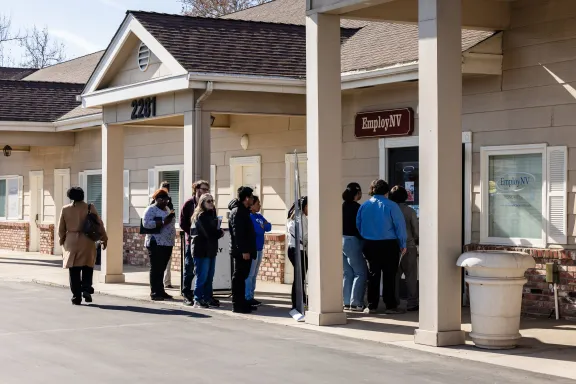
One challenge is that unemployment insurance systems are already underused. Data from the U.S. Bureau of Labor Statistics shows that nearly 75 percent of unemployed workers did not apply for unemployment benefits in 2022, a figure experts say remains broadly accurate today. Even as jobless claims remain relatively stable—between roughly 200,000 and 250,000 new claims per week—many unemployed workers never access the financial support designed to help them while searching for new jobs.
There are several reasons why workers fail to apply for benefits. Many assume they are not eligible, particularly if they voluntarily left a job or lack sufficient work history. Others expect to find new work quickly or believe they do not need financial support. In reality, eligibility rules vary widely by state, making the system difficult to navigate. Even those who apply often face challenges, as only about 55 percent of applicants ultimately receive benefits, and some employers contest claims because unemployment payments can increase their payroll taxes.
“Really, a wholesale reform is needed, especially as we think about the impact of AI on potential labor market disruptions, and especially as we might think of another recession coming down the pike as well”
As AI adoption accelerates, these structural weaknesses could become more visible. If automation leads to significant job displacement, governments may need to rethink how unemployment systems function and how workers transition into new roles. While technology historically creates new forms of employment over time, the pace of AI development could compress those transitions—making workforce retraining and social protections increasingly important in the years ahead.
Source: Fortune – “AI layoffs are coming. The problem may be compounded because nearly 75% of people don’t apply for unemployment benefits.” (March 9, 2026). (Fortune)