


For the last two years, most governments have approached artificial intelligence with a familiar set of questions: How do we regulate it? How do we make it safer? How do we remain competitive? But California may be asking a different question entirely: what happens if AI actually works?
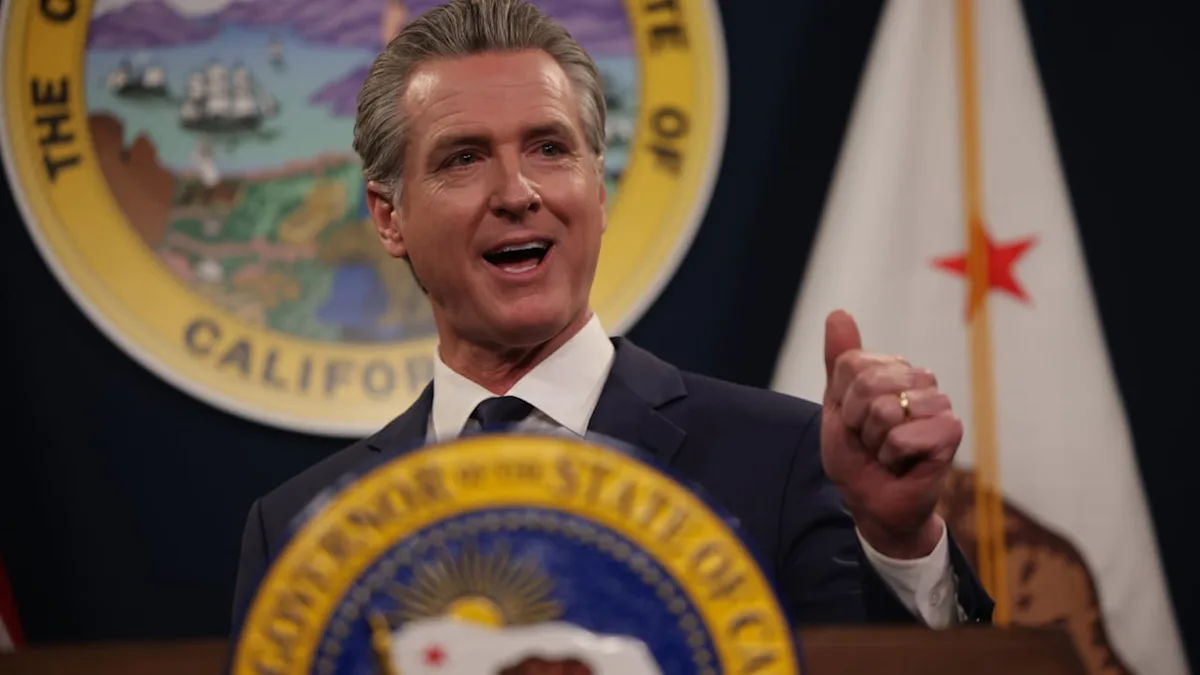
Governor Gavin Newsom has signed what is being described as a first-of-its-kind executive order designed to prepare workers, businesses, and communities for potential economic disruption caused by AI. But unlike many AI policies focused on model safety or misinformation, this order focuses on something much larger: redesigning the economic systems around work itself.
“California has never sat back and watched as the future happened to us – and we won’t start now. We have taken the lead on advancing innovation, safety, and transparency. But we must think bigger. This moment demands that we reimagine the entire system — how we work, how we govern, how we prepare people for the future — and that work is starting right here in the Golden State.
Today is just the first step as we rewrite policy and direction, creating a future of work that works for all.”Governor Gavin Newsom
The executive order directs state agencies to begin studying and preparing for scenarios where AI meaningfully reshapes labor markets. That includes tracking early warning signs of workforce disruption, reviewing severance and employment protections, modernizing workforce training programs, and exploring entirely new concepts including worker ownership models and forms of “universal basic capital.”
That distinction matters because there is a growing shift in the AI conversation. For years, disruption was largely theoretical. The debate centered around what AI might do someday. Today, the conversation increasingly revolves around what AI is already doing—compressing teams, automating workflows, changing hiring patterns, and altering the economics of knowledge work.
“As the epicenter of the tech industry, California recognizes our responsibility to ensure workers are prepared for success as AI reshapes the economy. Women, in particular, face disproportionate risks of displacement and widening economic inequality as AI evolves. So, California is committed to understanding AI’s impacts on workers, modernizing workforce training, and expanding pathways into the jobs of the future so more Californians are set up for success. Today’s executive order underscores California’s commitment to advancing opportunity alongside responsible innovation.”
Jennifer Siebel Newsom
What California appears to recognize is that productivity gains alone do not automatically create shared prosperity. Historically, technology waves have generated enormous wealth, but the benefits have not always been evenly distributed.
According to Stanford HAI’s 2026 AI Index, software developers ages 22 to 25 are among those most likely to see their skills made redundant earliest. This year, U.S. employment fell nearly 20% from 2024, even as headcount for older developers continued to grow.
If AI dramatically increases output while reducing the demand for certain types of labor, governments may eventually face difficult questions around who captures the value generated by intelligent systems.
Newsom hinted at this broader perspective directly: “This moment demands that we reimagine the entire system — how we work, how we govern, how we prepare people for the future.”
That statement may ultimately be more important than the policy itself.
Because the next phase of the AI era may not be defined by smarter models or faster chips. It may be defined by whether societies can redesign economic systems quickly enough to adapt to what those technologies create.
California’s executive order does not provide all the answers. But it may signal something important: governments are beginning to move from asking how to regulate AI to asking how to live with it.
And those may turn out to be very different questions.
Source: California Governor Gavin Newsom Executive Order on workforce preparation and AI economic disruption.