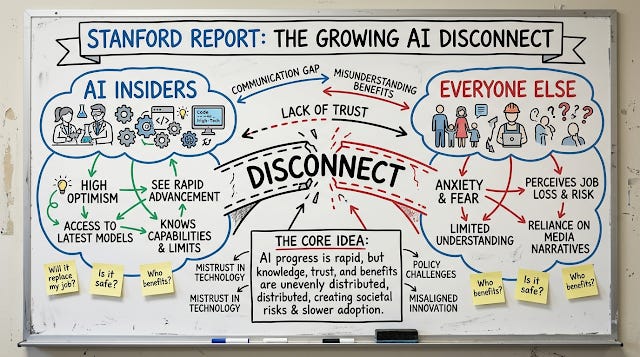
A new report from Stanford University highlights a growing divide between how AI experts and the general public view artificial intelligence. While experts remain largely optimistic about AI’s long-term impact, public sentiment is increasingly shaped by anxiety—particularly around jobs, healthcare, and the broader economy. This disconnect suggests that the conversation around AI is no longer aligned between those building the technology and those living with its consequences.
The shift in public opinion is becoming more pronounced, especially among younger generations. Recent data from Gallup shows that Gen Z is growing more skeptical and even frustrated with AI, despite being one of the most active user groups. Many young people now use AI tools daily or weekly, yet their concerns are rising rather than falling—signaling that exposure to the technology is not necessarily building trust.
For many in the tech industry, this backlash has come as a surprise. Much of the focus from AI leaders has been on long-term risks like Artificial General Intelligence (AGI), a future scenario where machines could match or exceed human intelligence. But for the public, the concerns are far more immediate and personal: job security, rising living costs, and the impact of energy-hungry data centers on everyday expenses. This gap in priorities is creating a widening disconnect between innovation and real-world impact.
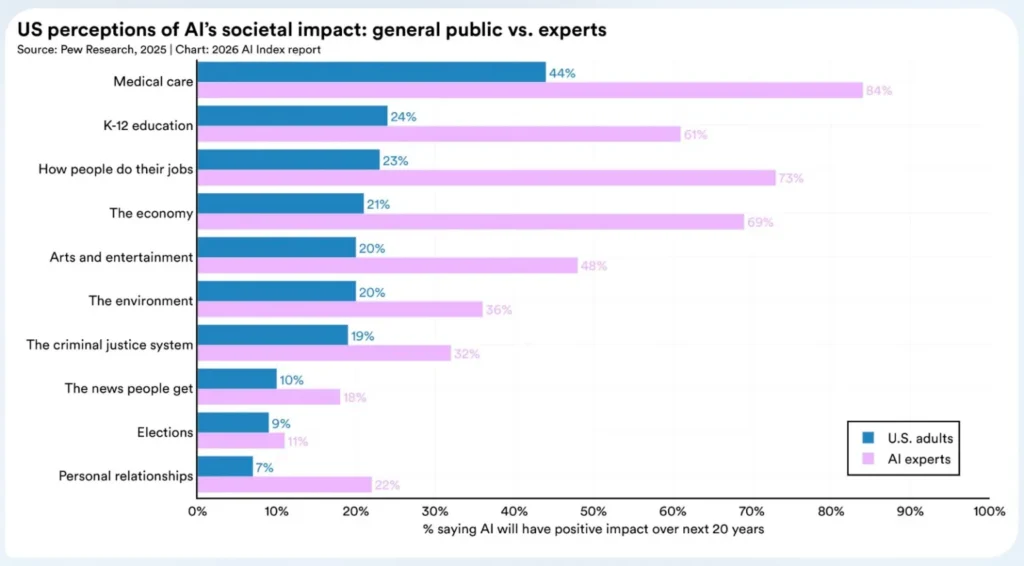
The numbers reinforce just how stark this divide has become. According to research from Pew Research Center, only 10% of Americans feel more excited than concerned about AI, while a majority of experts believe it will have a positive impact across key sectors. For example, 84% of experts expect AI to improve healthcare, compared to just 44% of the public. Similarly, while 73% of experts see AI benefiting the workplace, only 23% of the public agree—reflecting widespread fears of job loss and economic disruption.
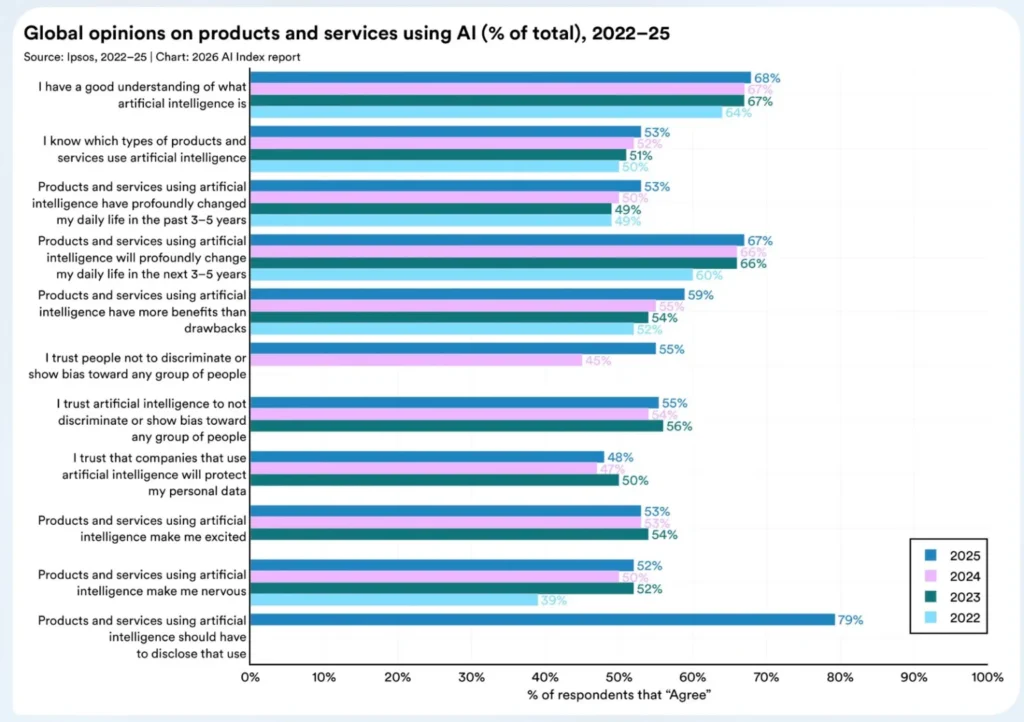
Despite these concerns, global sentiment toward AI is not entirely negative. Data shows a slight increase in the number of people who believe AI’s benefits outweigh its risks. However, at the same time, feelings of nervousness about AI are also rising. This dual trend—growing adoption alongside growing unease—captures the current state of AI: a powerful technology advancing rapidly, but without widespread confidence from the people it is set to impact the most.
Reference