





For years, artificial intelligence has been framed as a tool for answering questions. But with the release of GPT-5.5, that era is quietly ending. What OpenAI has introduced is not just a smarter model—it’s a shift toward AI that can execute real work, persist across tasks, and operate more like a collaborator than a chatbot.
At a surface level, GPT-5.5 is described as faster, more capable, and better at complex tasks like coding, research, and data analysis. But the real story sits beneath that. The model is designed to handle multi-step workflows, operate across tools, and deliver results in fewer iterations. As one early user put it, tasks that previously required multiple attempts now “started landing right the first time… [with] less back-and-forth.” (OpenAI)
This reflects a deeper transition happening across AI: from interaction to execution. GPT-5.5 performs strongly in environments that resemble real jobs—not just benchmarks. It can navigate computer systems, synthesize information across documents, and even contribute to scientific discovery by iterating through hypothesis, testing, and analysis cycles. In one case, the model helped produce a novel mathematical proof—something that moves AI beyond assistance and into co-creation. (OpenAI)
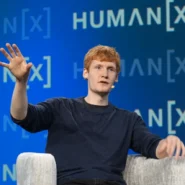
Dan Shipper, Founder and CEO of Every, described GPT‑5.5 as “the first coding model I’ve used that has serious conceptual clarity.”
The implications for work are significant. Early testers are no longer using GPT-5.5 as a one-shot answer engine, but as a persistent partner—reviewing documents, refining outputs, and executing complex tasks across time. This aligns with a broader trend: AI is becoming “agentic,” meaning it can plan, act, and adapt toward goals. The result is a new kind of productivity model where humans set direction, and AI handles execution.
But this shift also raises a harder question: what happens when AI doesn’t just assist work—but absorbs it? As models like GPT-5.5 improve, the boundary between human contribution and machine output becomes increasingly blurred. The value is no longer in doing the work, but in orchestrating it. That has implications not just for productivity, but for employment, skill development, and how organisations are structured.
Ultimately, GPT-5.5 is less about incremental improvement and more about a change in paradigm. It represents a move toward AI systems that don’t just respond—but deliver outcomes. And in that world, the companies and individuals who adapt fastest won’t be the ones asking better questions—but the ones who learn how to work alongside systems that can increasingly answer them on their own.
Source: OpenAI – Introducing GPT-5.5 (April 2026)